
Writing about Work
in poems and prose

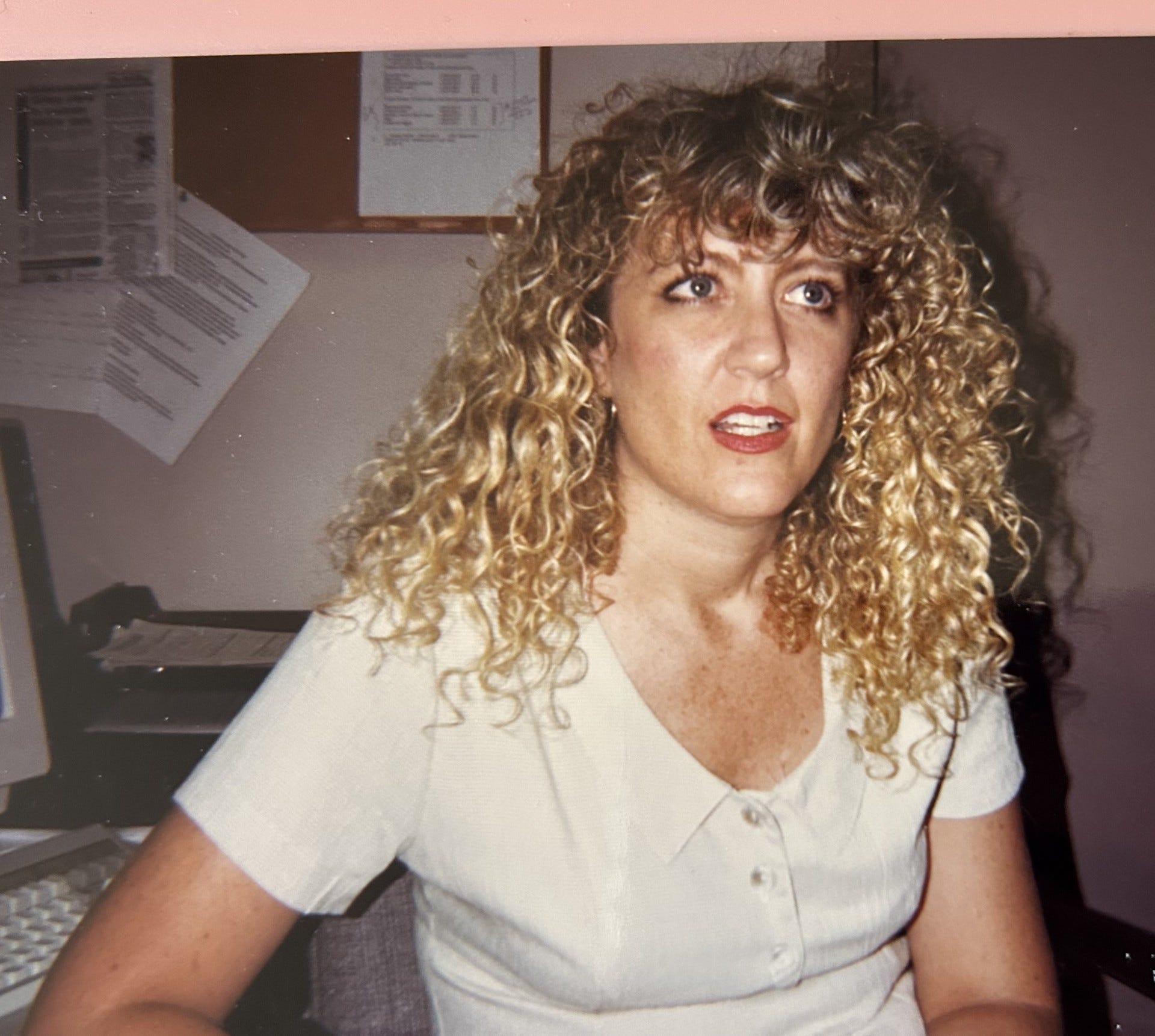
One of the first poems I wrote as an adult was about work. “Dad Goes to Work” takes place during the Vietnam War when my dad was in the Navy and as he goes to sea. It looks at my life as a child on Oahu in the six months between his leaving and returning.
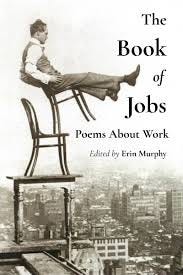
Recently Erin Murphy put out a call for unpublished poems for an anthology, The Book of Jobs: Poems About Work. Published on Labor Day, The Book of Jobs includes “Dad Goes to Work” among 134 other poems on a thrilling variety of jobs, all available to read for free at One Art and with an Open Access Edition forthcoming from Penn State University Libraries in 2026.
I have had many jobs, and the anthology reminded me of how often I have written about work. Another early poem, “Looking Right,” in my 2nd poetry collection, Luckily (Anhinga Press), takes place at an interview for a job I don’t want:
LOOKING RIGHT
When I interviewed for the grant research job at the hospital,
I was nervous and tried to remember what my boyfriend said,
that I’m a plum, a natural.
I thought the interviewer would talk about grants or research
or fundraising in general, but her first subject is makeup.
I am allowed to wear foundation and powder, but it must be
natural and correspond to my skin coloring. Mascara is okay
if applied lightly; true lip tones are acceptable. Nail polish
may not be worn longer than four days without a fresh application.
My hair must be in an easy-to-maintain style and may be
confined by a gold, silver, or tortoise shell barrette without
ornamentation. One small inconspicuous post earring per ear
is allowed (pearl, diamond, gold, or silver only) as long as they
match, do not exceed ¼”, and are worn in the lower lobe.
I learned the hospital has its own gas station that accepts payment
in payroll deduction. On my birthday, I can receive 25% off
in the gift shop; however, I am only the first applicant, there are many
after me I’m told, and they may re-run the advertisement.
It will be a month before the job really starts, but if I am
the lucky applicant, in five years I will be fully vested.
I don’t know what vested means, but in eight weeks I hope
to have made enough money to move to New York and never
see this hospital again. I don’t even like General Hospital. On TV,
Heather Locklear was late for her interview, arrived in a tank top
(scoop neck, a hospital no-no), and was hired on-the-spot.
For this $13 an hour job I may wear only solid-colored suits
(no pastels), navy blue, hunter green, many shades of brown,
and oddly, purple is okay. My jacket may have non-patterned buttons
in a color that matches the fabric. The interviewer’s blinkless eye
contact reminded me of an owl I saw in the park, staring at me
as if through two holes in a wooden fence. Hosiery is required.
Skirts must be straight, A-line, or pleated with hemlines no higher
than just above my knee and no longer than the bottom of my calf;
they must be easy-care synthetic or a natural fiber that looks like
linen or fine wool. The skirt may be fleck-patterned if, from ten feet
away, it gives the appearance of an approved solid color.
Bold plaids, lavender, pink, yellow, and mint green are banned.
A few departments allow female employees to wear pants,
but no knit fabric slacks. It was nearly 100 degrees outside,
my hair was wet and curling with humidity, forehead shining,
as I learned that turtlenecks are allowed, though no cap sleeves,
no sleeveless, no orange, rust, deep green or bright yellow.
I may not wear a shoe with a clear plastic heel or toe straps.
I am not allowed to have bad breath or other offensive
body odors. If I do not have my childhood immunization record,
I will receive shots for measles, rubella, tetanus, hepatitis B
and chicken pox. They will x-ray my chest. When I left,
the interviewer did not meet my eyes. In the rain, I lost
the parking garage, and by the time I found it, I had blisters
on both heels. I drove away so fast, I had to drive with just my feet,
my arms stuck in the navy blue suit jacket I was twisting off.

I wrote about having no sense of direction and taking a job in the Mapping Department in “The Cartographer’s Assistant” published in How to Live: A Memoir in Essays (Tupelo Press 2023), originally published online at New Orleans Review: The Cartographer’s Assistant.

In the essay, I focused on my mapmaker’s assistant job as well as on the political environment regarding welfare reform that really accounted for my job being created: The Personal Responsibility and Work Reconciliation Act (PRWORA) which replaced Aid to Families with Dependent Children (AFDC). States were encouraged to be creative in their welfare-to-work efforts. Part of this effort in Orlando was the creation of my job. It consisted of taking calls from people without cars who were being pushed off welfare if they didn’t work. Pre-Google Maps, it was my job to find them on a map and to determine the best transportation for them, and to arrange it. No one knew I couldn’t read a map.
I first wrote about working for the mapmaker in the context of working several temp jobs in the poem, “The Cartographer’s Assistant,” also published in Luckily:
THE CARTOGRAPHER’S ASSISTANT
Temping for the bus company was like eating lunch
at Chik-Fil-A under lights so bright in a booth so small,
you’re practically falling into each other’s pores,
having to eat with your eyes closed. I had no sense
of direction because of seventh grade geography,
my unsmiling, full-lipped teacher had assigned me a partner
before we went outside to measure the sky,
but I’d been deserted, left staring at concrete, a sharp edge—
Frank Eidson, a boy in a blond corduroy jacket that matched
his hair, took pity on my pink & yellow sunflower pants
(my mom’s—we could wear jeans to school on Fridays,
but I didn’t own any because Mom said the dye would wreck
her dryer), & Frank pointed, said a few words—compass
points of kindness, nothing concrete—geography went downhill
after that—map phobic, lost on every road. In my eighth floor
cubicle at the bus company were yellow wall-sized & computer
maps—my job: find transportation for people being kicked
off welfare, get them to work or school. Each person given 800
transportation dollars. I suggested we buy them cars,
but the blond mapping woman said that’s interesting in a coffee
philosophy way, & no one got a car, people calling me
to get to work at Trader Vics or McDonalds—no buses available,
no carpool—they all took cabs, almost $40 a day. I don’t think
anyone made that much in a day, wondered how they’d get to work
when the money was gone. I learned to find each person
on the map—like looking for something you’d lost, scouring
square inches—I called cab companies to pick them up,
take them home. There was a glass window around the entire floor,
& some days I’d think of pitching myself through it to relieve
the air-conditioned boredom. When they offered me full-time,
I thought, just spin me around twice & ask me to point north,
I’ll be free. It was worse at Pilgrim Insurance, looking up
4,000 zip codes a day —no windows, no private cubicles, just
a tiny chair with a seat nearly the size of my butt. Then,I temped
in a trailer for the developer who tore down the old Navy base
where I grew up, I could look out the portable window & see
the excavated dirt that was the hospital where my son was born—
the Office Manager had saved bricks from the base but wouldn’t
give me one. I tried this job twice, but couldn’t remember
which way to feed letterhead into the printer, the boss watching me—
& I cried as secretly as possible, turning toward the corner,
but later they brought in another temp who baked them brownies,
& they moved me behind a felt gray cubicle wall,
with a laptop, and no work—just sitting, looking at the carpet wall.
Before, I’d had a phone & a window, & Michael had called once,
said, You sound like you’re convalescing. When I was tired,
direction was the first to go.
I’d written poems from working for an opera company:
LITTLE WING
Charles decorated Nagasaki with cut petals, thousands
of pink and white stars to throw into Cio-Cio San's hair
like a night sky. On the fire ladder, I swayed
as if over sea, reached the fly loft. On a gangplank of sails,
I looked up into a giant harp, as if I were nothing
but the music inside, scenery below flying on ropes — cream
Austrian drape, American flag with 45 stars. It's the early
twentieth century, a 999-year marriage contract with a monthly
renewal, teenage girl like a delirious bird, here come the flowers,
here comes the moon, little wing. My red-haired neighbor
was Suzuki, wringing her hands outside transparent paper walls
when the sailor stayed away, no parasols, no fans.
The bird girl killed herself with her father's knife, sailor off
in the distance calling. He may love her sideways, but the facts
are bald, her heart fasting. When I called you, and a woman laughed
like a banjo, refused to let me speak to you, I rocked without
a rocking chair. Night after night, the same story told, drapes fly,
a giggling cloud of flowers, the girl's devotion escaping back.
(Five Kingdoms, Anhinga Press)
PINKERTON & BUTTERFLY GO TO THE DOLLAR MOVIE
In the morning, when I went to work, Pinkerton & Butterfly
were sitting on the front steps of the opera house, knee to knee,
doing a crossword puzzle. They looked up smiling, asked directions
to the dollar movie.
Because love can be like that, one minute you’re at sea
& the next you’re shoulder to shoulder reading newsprint
close as a slit throat, an obi—little package carried on your back,
little gift.
MARGUERITE
My aunt Marguerite bathed three times a day
because her nerves were burning shingles.
As a girl, she had beautiful waist-length hair.
Everyone loved her sister.
When her sister died, she knocked on her stone,
twice, as if it were a door.
~~~~
At the opera, an elderly man mistook me
for Faust’s Marguerite,
blond, with small lines
like papercuts under her eyes. In prison
for murdering her child, she made a baby
of straw, rocked him. Mephistopheles flew in
from Houston with his three-year-old son,
who played the part of the baby.
Dressed in a white sheet, he comes from heaven
in the final trio. On the second night,
he got distracted waiting for his cue
by the curtain, came toward me,
a little sail, until the stage manager pulled him back.
When my son died
a thousand miles away,
I made my arms a cradle.
~~~
The veil over our eyes is thin,
the dead visible like candles through gauze.
Our souls relax at night,
and they are everywhere in the dark—
on the paths in the fields, in the wind,
alongside the living
with small lamps, sometimes flowers,
a heart or wreath made of pine.
(Underwater City, University Press of Florida)
PINKERTON
writes a love letter on blue paper
cries his blackberry voice
(you could lick his tears)
time brambling
cleft
oh lead us into a high mountain
into ourselves—
snow, so as no
fuller on earth can white
(Luckily, Anhinga Press)
ANNUNCIATION
It was like meeting Madama Butterfly
backstage,
but without that nervousness &
animation,
like standing in the lattice
watching the day-old birds lift up their
heads, dark eyes, open their mouths wide,
then settle down against each other
for sleep,
the door
that had been closed to him,
& then the trees
in the yellow moon he made around,
reading my mouth, & all our clothing
had about it the flowers they occasionally crush,
leafy trails which when embroidered, transform
the embroidery on the birds’
wings in the nest,
orange falling across
like Gabriel’s when he leaned in to comfort you.
I’d written about working in a homeless shelter:
IMMORTELLE
The men sleep on deep blue mats, head to foot, in a metal tent,
windows open to keep them from panicking.
Weapons aren’t allowed, but maintenance found dozens
of knives under the shed, clattering like silverware.
The children think the leaves of my green plant are flowers, a boy
carries a leaf high in the concrete yard, waving, girls taking
turns carrying the plastic pot, one girl asks if she is doing a good
job, balancing saucers and bells, trumpets, sweet everlasting.
33 REASONS NOT TO ATTEND THE WHITE HOUSE CONFERENCE
You will be required to show up in Tampa at seven a.m. to register.
You will drive to a hotel in Tampa the night before & get lost on
the one-way streets. You will request a non-smoking room & be
given a room full of smoke. You will become claustrophobic
in the elevator because you don’t know how to insert your room
card to open the elevator door. You will pay sixteen dollars for
a fish sandwich because you are too tired to find a restaurant.
Your boots are not made for walking the four blocks to the conference,
though they are sleek. You are not wearing a blue suit. The White
House speakers appear to be three cheerleaders in their early 20s
with bouncy hair, abundant make-up, and end-of-sentence lilts.
Jeb Bush will speak & receive a standing ovation. You & two
Catholic ladies will remain seated. (It is not that you are prejudiced
against men named “Jeb”—you liked the one on Beverly Hillbillies.
But that was Jed.) Attorney General Ashcroft will speak & receive
a standing ovation. You & two Catholic ladies will remain seated.
Ashcroft will imbed seven manipulative stories into his speech,
one involving a boy with Down’s Syndrome who sang with him
at church. The federal security guys are spaced a foot apart all
around the room. You will wonder if the feds notice you don’t clap
or give a standing ovation & wonder if this is considered a minor crime.
One of the feds will seem to find you attractive, smiling while you eat
your vegetarian wrap with no dressing, inching closer, as if all the
security guys are playing a game & taking the place of the man in front
of him at designated times. You wonder if the security man will decide
you are a Communist & put you on a list, or at least put you on a list
of non-Republicans. You will want to stand up when Ashcroft
is speaking & ask a brief question about the war. You wonder how
the security guys would respond to you behaving like a citizen
of the United States. Jeb & Ashcroft both have remarkably pink
skin, the way a baby brought back to life is said to be pinking.
Either Jeb or Ashcroft will say that he is building the first faith-
based prison. You & the Catholic ladies will look alarmed. Jeb
or Ashcroft will receive a standing ovation. One of the Catholic
ladies will tell you that in Pennsylvania there were homeless people
who lived well, & you will want to show her the shelter in Orlando
with 750 people living in an old TV station from the 1950s,
including Mary and 185 other children under seven years old.
When the blond-bobbed cheerleader comes back out, one of the
Catholic ladies will say, Here’s my favorite. You will fall asleep
in your chair even though you’ve had six cups of coffee. The coffee
stand will close, its register tape finishing a celebratory wave, though
you still have to drive home. When you decide to visit a Cuban-
American poet instead, you pass a restaurant called the Seven Seas,
the side wall a mural of a woman’s head with the body of a crustacean.
Though you need to eat dinner to balance the yin of six cups of coffee,
you are nauseated by the Shrimp Woman. You pass Armenia again—
at Thanksgiving it was the mark of too far. You pass S. Rome, making
you sad for the winter gone in central New York, missing M. and the
snow angel. When the Cuban-American poet is running late, you will
consider putting your head down on your table in the bookstore,
like in elementary school when you’d had enough.
(Five Kingdoms, Anhinga Press)
I’d written poems about working in a health food store in my first book, Underwater City:
COLONIAL MALL I
An old woman
came in
slow
and asked
where the old
girls were—
I told
her none
were working
that day,
and she said,
“Tell them
my husband,
the one
with two
canes, died.”
(Underwater City, University Press of Florida)
COLONIAL MALL II
A girl was wheeled fast through the mall,
she was lying flat on a high bed,
and her face was sideways
toward the window of my store.
A small and roundish woman pushed.
The girl’s face was wild,
mouth stuck with fear,
her eyes pulling
everything she saw inside.
Her hair didn’t fit on the bed,
it fell off the end,
so long I wondered how
it didn’t catch in the wheels,
her hair flying as the bed
drove by.
The round woman didn’t seem
big enough to be pushing that fast,
the bed seemed to go on itself
then, the wild Rapunzel girl
saw me
and she pulled me inside.
BIRD IN SPACE
after Brancusi
All the other cashiers ran into the stockroom when the testy woman with the gauze
covered face came in, the square of gauze growing bigger each week until it couldn’t
cover the black in her cheek, moving toward her nose like ants on the march, black tattoo.
She became nicer then, smiled, said thank you, and one day told me about a cave
in a hot dry country that she’d entered with her sister, exposing themselves to an agent
that had first killed her sister and was now chink chinking away at her.
I imagined something like the thick yellow powder scattered around Egyptian tombs,
but didn’t ask, just rang her groceries, wanting to unhitch her copper bracelet, tiny
thorns jabbing every which way, little crown around her wrist, face silting up, like a
lake filling with sediment, turning to marsh, anatomy eliminated, revealing she’d gone.
I wrote about teaching English as a Second Language:
Second Language
My first summer as a teacher
in an international language school,
the Croatian students dressed me in white,
a wedding dress, Iva and Jane insisting
I play the runway game in the portable
classroom. The purpose was vocabulary
building—one student acts as model,
walking the stage, while another
is the announcer, describing the outfit
for the crowd, but they howled
so loudly at my modeling, I couldn’t
hear the details of my dress, plucked
a cathedral train, the soft hand
of chiffon, though by then I wasn’t sure
they were even speaking English,
doubled over, hysterical, hair sweeping
the floor, the students next door giving
up on their lesson, joining us with their
teacher who I had loved once, and wished
that I could marry, the girls like fairy
godmothers intuit this,
gowning me.
Their own city singed from war,
fields and villages mined.
At the mosaic table in a coffee house,
I learned to say I love you in Croatian,
Volim te, we said it in every language
we remembered, laughing because it’s
always the third phrase you want to know:
hello, goodbye, I love you.
Their imaginary dress fell over my hair,
like a wish sweeping winter from another
country, as if they could bequeath me
love, like that white dot, the moon—
suicides abandoned in the trees,
the sullen blowing bubbles in the mud.

I wrote about working for an artists-in-residence program:
1984
Allen Ginsberg wrote on the wall
of my closet twenty-two years ago,
on the half-moon after his birthday,
& said he’d left flowered Japanese
napkin holders here—a gift for us,
his handwriting happy & big as mine
when I was a girl, the letters brushing
my clothes, as if I could walk back
a bit, sit with Allen, but when I sleep
in his bed, I don’t dream of him
or anyone else who slept here: not the side-
by-side of William Stafford & his wife,
not Carolyn Kizer’s crowny hair
on the pillow, not Ferlinghetti crayoning
his name across the wall; instead,
I dream of telling Ann why I think she’ll find
a man even though almost everybody in this town
is old & retired, the men walking down the beach
in wide-open shirts, blown about. Another night,
I go so far away, I wake up on the bridge
to the sea where there are glass sandals, flowered
& skewed no walking way
as if whoever left them lifted out.
But now the people are arriving with plastic
bags & their investigation of the sand,
and the ocean is telling its story
from the beginning. Allen, I think someone
took the napkin rings, I mean, we don’t even
have napkins, but thank you for thinking
of us & leaving these invisible things.
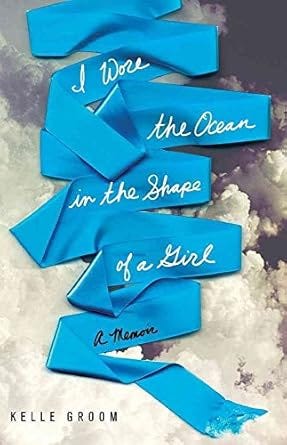
I’d written about my first job at 17 as temporary secretary for the Weapons Department of the U.S. Navy in Rota, Spain in a chapter of my memoir I Wore the Ocean in the Shape of a Girl (Simon & Schuster). Another chapter in I Wore the Ocean in the Shape of a Girl, “Shelter,” takes place in the homeless shelter where I worked for three years.
There are many more instances, but one thing I’ve noticed is that I almost always begin with a poem. The poem usually keeps the focus tight – a moment or series of moments. In an essay or memoir chapter, I can open that moment up and make something expanded and new.
If you’re interested in writing about work, you could think of a moment that has stayed with you. As you can see from these work poems, it can be anything – a complaint, a frustration, something you’ve seen that you can’t understand, something that was revealed like a curtain opening for a second…
See what happens. If you like, let me know how it goes. I would love to hear.
Perfect way to start my day. Thanks, Kelle.